The $80K Screwdriver: Why Fixing Broken Consoles Is Quietly Becoming One of America's Smartest Career Moves
I want to tell you about a career path that requires no four-year degree, has almost zero competition from offshore labor, is recession-resistant because people will always break their stuff, and is being actively suppressed by some of the most powerful companies in consumer electronics.
I'm talking about fixing video game consoles for a living. And before you laugh, let me give you a number: $80,000 to $120,000 per year, for experienced independent repair technicians in mid-to-large US markets. That's not a cherry-picked outlier. That's what good people are making in a trade that most guidance counselors have never mentioned to a single student.
The Repair Boom Nobody Planned
The gaming repair industry didn't emerge from a business plan. It grew organically from a simple reality: people buy expensive gaming hardware, gaming hardware breaks, and the official repair options are slow, expensive, and increasingly designed to push you toward buying new rather than fixing old.
A PlayStation 5 with a disc drive failure. An Xbox Series X that won't read discs. A Nintendo Switch with drifting Joy-Cons — a problem so widespread that Nintendo has faced class action lawsuits over it. These aren't edge cases. They're the everyday reality of a gaming market that sells hundreds of millions of units annually, and where manufacturer repair options are, to put it charitably, not optimized for the customer.
Into that gap stepped the independent repair technician. Armed with YouTube tutorials, community-maintained repair guides, and an increasingly sophisticated aftermarket parts ecosystem, these technicians built businesses from scratch. Many started as hobbyists who got good enough that friends started paying them. The ones who treated it seriously discovered something unexpected: the demand was essentially unlimited.
What the Work Actually Pays
Let's get specific, because vague claims about earning potential are useless. Here's what independent console repair looks like economically in 2024.
A Joy-Con drift repair takes an experienced technician 20-30 minutes and generates $40-60 in labor. A PS5 disc drive replacement runs $80-150. HDMI port repairs on the PS4, one of the most common repairs in the industry, typically bill at $90-130. A technician running a solo shop in a market of 200,000 people, doing 8-12 repairs per day, can clear $200,000 in gross revenue. After parts and overhead, net income in the $80,000-$100,000 range is realistic for someone who's been at it for two or three years.
In major metros, the numbers are higher. Technicians in New York, Los Angeles, Chicago, and Houston report premium pricing power because the density of broken hardware is enormous and the competition, while growing, hasn't caught up to demand.
This is, to be direct about it, more than most journalism graduates make. It's more than many people with master's degrees make. And it requires tools that cost a few hundred dollars and knowledge that can be acquired free on the internet.
The Companies That Want This Job to Not Exist
Here's where I need to address something, because it's central to understanding why this career path is both lucrative and genuinely embattled.
Sony, Microsoft, and Nintendo have all, to varying degrees, taken steps that make independent repair harder. Proprietary screws. Serialized components that pair to specific consoles and refuse to function if replaced with non-paired parts. Software locks that flag repaired units. Refusal to sell parts to independent shops. Legal pressure on parts suppliers.
This isn't conspiracy theory. It's documented, it's been the subject of Congressional testimony, and it's the reason right-to-repair legislation has become a genuine policy battleground in states across the country. As of 2024, several states have passed or are advancing right-to-repair bills that would force manufacturers to make parts, tools, and documentation available to independent technicians and consumers.
The gaming industry's position in this fight is awkward. The same companies that spend millions marketing their hardware as premium consumer products are simultaneously doing everything legally possible to ensure that when that hardware breaks, your only real option is to pay them for service or buy new. The independent repair community is the most direct challenge to that model, which is why it's both thriving and under sustained pressure.
The Trade School Opportunity That's Being Missed
Here's my actual argument, and it's directed specifically at school administrators, vocational program directors, and parents who've been told that trade school is the sensible alternative to a four-year degree:
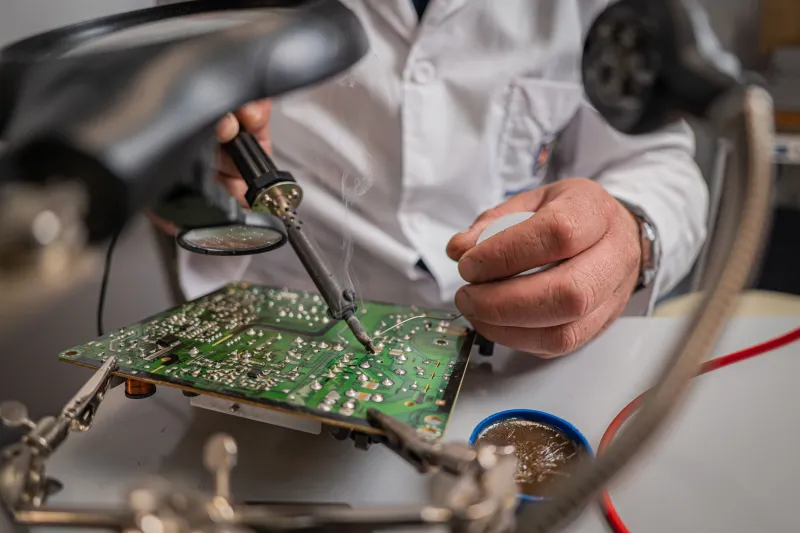
Console and electronics repair is not being taught anywhere near enough. The skills involved — soldering, microsoldering, component-level diagnosis, firmware troubleshooting, customer service — are teachable. They're also genuinely transferable. A technician trained on console repair can pivot to smartphone repair, laptop repair, or general consumer electronics. The underlying skill set is broadly applicable.
Community colleges and trade schools that add gaming hardware repair to their electronics programs would be filling a real workforce gap while giving students a credential with immediate earning potential. The startup costs are low. The curriculum materials exist in community-maintained repair databases. The job placement story essentially writes itself, because every shop doing this work is hiring.
Instead, most vocational programs are still organized around trades that, while valuable, have established pipelines and significant competition. Console repair is wide open. The technicians who got in early are making serious money precisely because the supply of trained workers hasn't caught up with demand.
The Bigger Picture
The independent console repair industry is, at its core, a story about what happens when a community decides that official channels aren't good enough and builds its own infrastructure. The technicians doing this work didn't wait for permission from Sony or Microsoft. They learned the skills, bought the tools, built the customer base, and created businesses that the manufacturers they're effectively competing with would prefer didn't exist.
There's something very American about that, and something very gaming-community about it too. The same DIY ethos that built the speedrunning scene, the modding community, and the indie game industry is now building a blue-collar repair trade that's generating real, sustainable income for people who were smart enough to see the opportunity.
Your local high school guidance counselor probably hasn't heard of this. Your state's workforce development board almost certainly hasn't built a program around it. The technicians already in the field are, for now, happy about that — less competition is good for their rates.
But the opportunity is real, the money is real, and the only thing missing is the institutional recognition that this is a legitimate, valuable, well-compensated career path. Someone should probably tell the guidance counselors.