The Accidental Influencer: How Your Non-Gamer Partner Is Running the Entire Industry Right Now
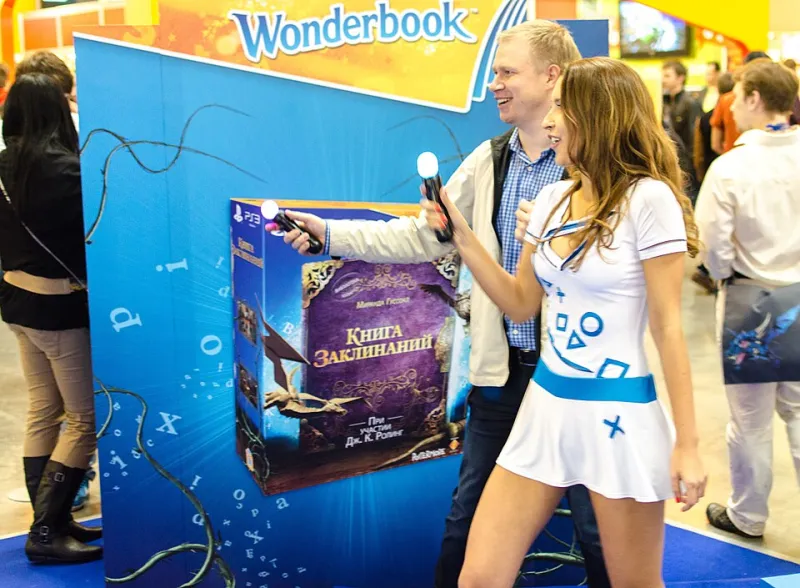
Photo: Sergey Galyonkin from Raleigh, USA, CC BY-SA 2.0, via Wikimedia Commons
At some point in the last few years, game studios looked up from their spreadsheets and noticed something interesting: the people dragging their partners, roommates, and siblings toward a controller — and then actually getting them to enjoy it — were generating more revenue than the hardcore faithful who'd been buying day-one editions since the PS2 era.
And thus began one of the quietest, most consequential shifts in the history of the medium.
Welcome to the age of the Accidental Influencer — the non-gamer who never asked to be here but is somehow running the whole operation.
The Reluctant Participant Economy
Let's start with the numbers, because the numbers are genuinely wild.
It Takes Two — a co-op game explicitly designed to be played by two people, one of whom is almost certainly more enthusiastic than the other — sold over 10 million copies and won the Game of the Year award in 2021. Its developer, Hazelight Studios, built an entire business model around a mechanic called Friend's Pass, which lets a second player download and play for free. The whole design philosophy is engineered for the moment when a gamer turns to their partner and says 'just try it, you don't even need to be good.'
That pitch — 'you don't even need to be good' — is worth billions of dollars, and the industry is finally starting to understand why.
Overcooked, Moving Out, Stardew Valley, Animal Crossing, Minecraft — the titles that have crossed over most dramatically into non-gaming households in the past decade share a common thread. They're easy to enter, cooperative rather than competitive, and they don't punish the less experienced player in a way that makes them feel stupid. They're, in short, designed with the reluctant participant in mind.
This is not an accident. It is an increasingly deliberate strategy.
The Eye-Roller as Target Demographic
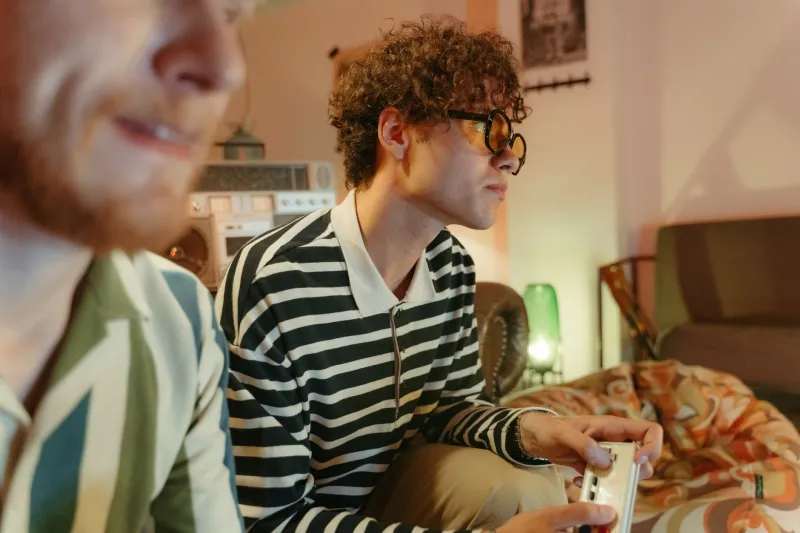
Here's a scenario that has played out in approximately ten million American living rooms: Person A is a gamer. Person B is not, and has opinions about how much time Person A spends gaming. Person A, in a stroke of either genius or desperation, suggests they play something together. Person B agrees, mostly to stop the conversation. Three hours later, Person B is yelling at Person A for not chopping the onions fast enough in Overcooked and has completely forgotten they weren't a gamer.
Person B is now a gamer. They just don't know it yet.
Marketing departments have started actively targeting Person B — not the converted version, but the pre-conversion skeptic. Nintendo has been doing this longest and best, with ad campaigns that consistently show games being played in social contexts, often with mixed-enthusiasm participants who are clearly having fun despite themselves. The Switch's form factor — portable, shareable, non-threatening — is basically a physical manifestation of the 'just try it' pitch.
But Nintendo isn't alone anymore. PlayStation's recent marketing pushes have leaned heavily into the 'games for everyone' messaging, and Xbox's Game Pass pitch is increasingly framed around household value rather than individual hardcore use. The reluctant participant is no longer a side effect. They're a customer acquisition strategy.
How Non-Gamers Are Changing What Gets Made
The influence runs deeper than marketing. The Accidental Influencer is reshaping what games actually exist.
Accessibility features — once a niche consideration — have become a mainstream design priority, in part because studios realized that simplified control schemes, adjustable difficulty, and clearer UI weren't just helping players with disabilities. They were helping non-gamers stay in the room long enough to become invested. The Last of Us Part II shipped with one of the most comprehensive accessibility menus in AAA history. Forza Horizon 5 has an 'Unbeatable' difficulty and also an 'Casual' mode where the game basically drives for you. Both exist because the audience is bigger and more varied than it used to be.
Co-op design has exploded as a genre priority. Games that previously would have been single-player experiences are being rebuilt around the assumption that two people might be playing — one engaged, one curious. A Way Out, another Hazelight title, literally cannot be played alone. The entire creative premise is built on the two-player requirement.
Even live-service games are adjusting. Fortnite's party mechanics, creative modes, and low-stakes social spaces are explicitly designed to accommodate players who join because someone they know plays — and who might bounce if the experience is immediately hostile or too competitive.
The Couch Economy Is Real
There's a social dimension to this that goes beyond design and marketing. The non-gamer in the room is also the person who decides whether gaming is an acceptable household activity, how much of the TV it gets to occupy, and whether the next console purchase gets approved or vetoed.
Game studios used to ignore this person completely. They made games for the enthusiast and hoped the enthusiast's household would accommodate the hobby. That calculation has flipped. Now studios are actively trying to make the non-gamer an ally — or better yet, a convert — because a two-gamer household buys roughly twice as many games, spends more time on platforms, and is significantly more likely to subscribe to services.
The math is not subtle.
What the Gaming Community Needs to Hear
Here's the part that's going to sting a little for the hardcore crowd: the 'casual gamer' you've been low-key dismissing for decades is currently your industry's most important growth engine, and the non-gamer sitting next to them is the reason that person is here at all.
The gate-keeping instinct — the cultural reflex that wants gaming to remain a space for people who've 'earned' it through years of dedicated play — is not just culturally exhausting. It's economically counterproductive. Every reluctant participant who gets welcomed into the space is a potential convert. Every convert is a customer. Every customer funds the next ambitious, weird, expensive, glorious game that the hardcore audience claims to want.
The Accidental Influencer didn't ask for any of this power. They just sat down on the couch and picked up a controller because someone they liked asked them to.
And now they're running the whole show.
Maybe thank them next time they suggest playing something together. Even if they always burn the soup in Overcooked.