The Games That Raised You Were Actually Job Training the Whole Time

Let me paint you a picture. It's 2003. You're twelve years old, it's 11PM on a school night, and you're managing a guild of thirty-seven strangers through a dungeon raid in World of Warcraft. You're coordinating roles, resolving interpersonal conflicts between people you've never met, managing a shared resource pool, and making real-time tactical decisions under pressure.
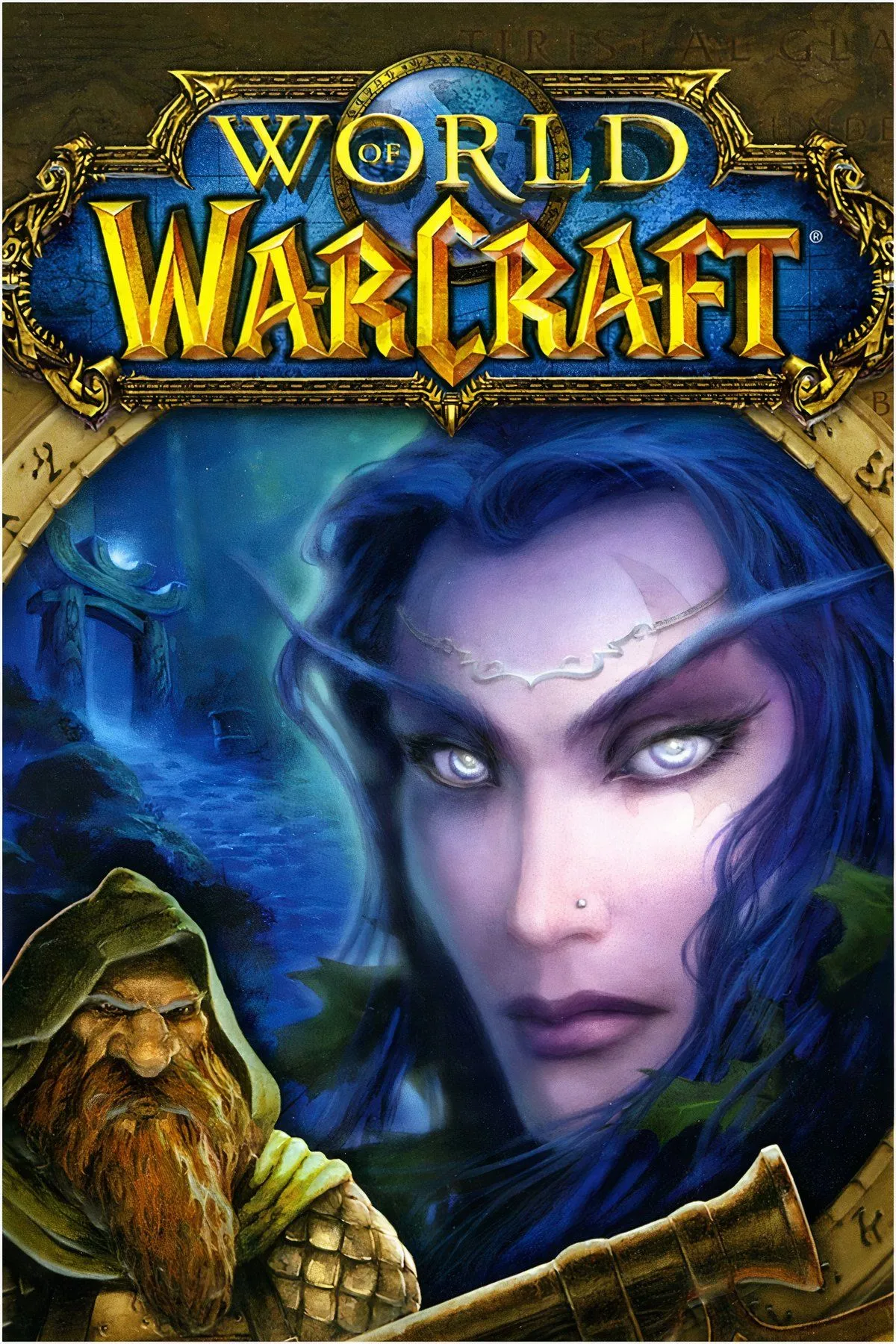 Photo: World of Warcraft, via static0.gamerantimages.com
Your parents thought you were wasting your life.
Your future employer would have called it leadership development.
The Research Is Starting to Catch Up
For years, the idea that video games build transferable professional skills was the kind of thing gamers said defensively at Thanksgiving dinner. Now it's the kind of thing that gets published in peer-reviewed journals and cited in Harvard Business Review.
A growing body of research from institutions including the University of Rochester, MIT, and the London School of Economics has documented measurable cognitive benefits tied to specific gaming genres. Action games improve attention allocation and the ability to track multiple variables simultaneously. Strategy titles enhance long-term planning and resource management thinking. Multiplayer role-playing environments develop communication, negotiation, and team coordination skills that translate directly into professional contexts.
A 2023 study from researchers at the University of Glasgow found that students who regularly played video games demonstrated stronger problem-solving capabilities and communication skills compared to non-gaming peers — outcomes the researchers attributed specifically to the iterative failure-and-adaptation loop that most games are built around. You die, you learn, you adjust, you try again. That's not just good game design. That's the scientific method applied to decision-making.
The Wall Street Strategy Gamer Pipeline
Here's where it gets fun. Talk to enough people in high-pressure analytical fields and a pattern emerges that's too consistent to be coincidence.
Financial analysts and quantitative traders who grew up on real-time strategy games — StarCraft, Age of Empires, Command and Conquer — describe the professional experience of managing a portfolio under time pressure as feeling structurally familiar. The cognitive framework of balancing resource acquisition against risk exposure while anticipating competitor behavior is not abstract finance theory to them. It's something their brains rehearsed for thousands of hours before they ever set foot in an office.
A portfolio manager at a mid-sized investment firm in Chicago — who asked to remain anonymous because "my clients don't need to know my edge came from StarCraft" — described his approach to market volatility using language almost identical to how competitive RTS players describe macro-level game management. "You're never reacting to one thing," he said. "You're always managing the whole board."
This is not a one-off anecdote. The overlap between competitive strategy gaming backgrounds and quantitative finance careers is documented enough that some hedge funds have quietly started including gaming backgrounds in candidate screening conversations.
The MMO Executives Running Your Favorite Companies
If the strategy gamer-to-analyst pipeline is interesting, the MMO-guild-leader-to-executive pipeline is genuinely remarkable.
Managing a high-performing MMO guild in the 2000s was, without exaggeration, one of the most complex organizational challenges available to a teenager in American suburban life. You were recruiting talent, managing interpersonal dynamics across dozens of people, allocating shared resources fairly, setting organizational goals, handling underperformers, and maintaining morale through extended periods of failure — all voluntarily, with no formal authority and no paycheck.
Researchers at IBM published findings years ago noting that the leadership challenges faced by virtual world guild leaders mapped almost perfectly onto the challenges faced by real-world corporate managers. The skills weren't analogous. They were essentially identical.
It's not surprising, then, that a disproportionate number of people in management and organizational leadership roles in the tech industry specifically can trace their first real leadership experience back to running a guild, a clan, or a competitive team in an online game. The org chart was a raid roster. The quarterly review was a post-wipe debrief.
What the Specific Games Actually Taught
Not all games built the same skills, and it's worth being specific about what the classics were actually training.
Civilization taught long-horizon thinking, consequence mapping, and the understanding that early decisions compound in ways that aren't immediately visible. Urban planners, policy analysts, and systems architects disproportionately cite this franchise.
The Sims — and yes, this one is underrated as a professional development tool — taught resource management, priority sequencing, and the uncomfortable reality that neglecting maintenance has exponential costs. Several architects and project managers have described their intuitive understanding of workflow bottlenecks as something they first experienced watching a Sim standing in a puddle next to a broken toilet while the kitchen was on fire.
Sports management titles like Football Manager and the MLB The Show franchise built statistical intuition, roster optimization thinking, and the ability to evaluate talent across multiple variables simultaneously. The overlap with actual sports analytics careers is so well-documented at this point that MLB teams have directly recruited from competitive gaming communities.
Puzzle and adventure games — Myst, Portal, the Monkey Island series — built lateral thinking, comfort with ambiguity, and the ability to hold multiple unsolved problems in working memory simultaneously. These are the engineers and UX designers who seem to operate on a different cognitive frequency than their peers.
The Part Where We Reckon With the Narrative
Here's the thing that stings a little in retrospect: the same culture that spent twenty years telling kids that gaming was rotting their brains and destroying their futures was simultaneously watching those kids develop skills that the formal education system had almost no framework for teaching.
College doesn't have a course in real-time decision-making under resource constraints. High school doesn't offer a class in managing distributed teams across time zones. But World of Warcraft did. StarCraft did. Civilization did. The games that millions of American kids played in their bedrooms while being told to go be productive were, in their own chaotic way, more productive than the adults watching them could recognize.
The research isn't saying video games are a substitute for education or hard work. It's saying the skills were real, the training was real, and the dismissal was wrong.
So the next time someone asks you to justify the hours you spent gaming as a kid, you don't have to get defensive anymore. You can just hand them your resume.
The games raised you right. The career just finally caught up.