School Boards Are Swapping Dodgeball for Headsets and Parents Are Absolutely Losing It
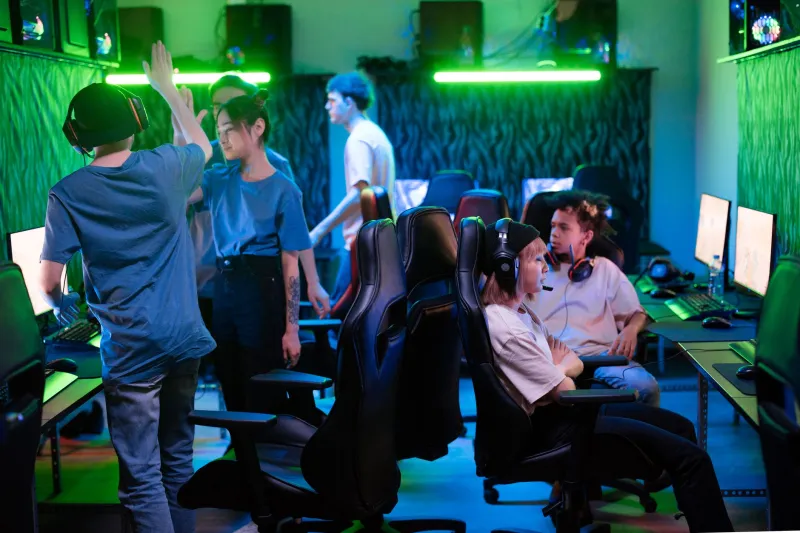
Somewhere in suburban Ohio right now, a parent is standing at a school board microphone, visibly vibrating with fury, delivering a passionate three-minute speech about the decline of American civilization. The cause of civilization's decline, per this parent: the school district allocated $15,000 to start an esports team.
Three rows behind them, a sixteen-year-old who struggled to make friends, tanked his GPA, and spent most of freshman year invisible is sitting quietly, thinking about how the esports program was the first thing at school that ever made him feel like he belonged somewhere.
This is the esports-in-schools story. It contains both of those people, and it's more complicated and more interesting than either the cheerleaders or the critics want to admit.
How We Got Here
The National Federation of State High School Associations recognized esports as an official activity in 2018. That was the green light. Since then, the growth has been legitimately staggering — over 8,000 US high schools now have some form of organized esports program, with middle schools following close behind. In some states, Texas and Georgia most prominently, the infrastructure rivals traditional sports in terms of sanctioned leagues, playoff structures, and scholarship pipelines.
The PE credit integration piece is newer and considerably more controversial. A handful of districts — primarily in California, Florida, and Illinois — have experimented with awarding physical education credits for esports participation, which is where the school board microphone speeches really started heating up.
The logic, from administrators who support it, is that esports programs teach the same core competencies PE is theoretically designed to build: teamwork, discipline, resilience, strategic thinking, and performance under pressure. The counterargument, from parents who oppose it, is that their kid is sitting in a chair clicking a mouse and that is not gym class.
Both positions contain truth. Which is uncomfortable for everyone.
What the Data Actually Says
Here's where the culture war crowd on both sides gets inconvenient: the academic research on school esports programs is more positive than the critics expect and more nuanced than the advocates like to admit.
Studies from the University of California and Ohio State have found that students in structured school esports programs show measurable improvements in GPA, attendance, and school connectedness compared to control groups. The effect is particularly pronounced among students who weren't previously involved in any extracurricular activity — which, it turns out, is a lot of kids.
School connectedness, for anyone who forgot their education policy coursework, is one of the strongest predictors of academic success and mental health outcomes for adolescents. Programs that improve it are worth taking seriously.
The flip side: there's limited longitudinal data, some programs are poorly run and essentially just supervised gaming sessions with no structured coaching or development, and the PE credit argument requires a philosophical stretch that even some esports advocates aren't comfortable making.
"I believe in esports programs completely," one high school esports coach in suburban Atlanta told us. "But I don't think they're gym class. I think they're their own thing, and they deserve to be taken seriously on their own terms. Trying to squeeze them into PE feels like it's actually underselling what they are."
Meet the Coaches Who Are True Believers
The people running these programs tend to fall into one of two categories: former competitive gamers who got into education, and traditional coaches who discovered esports and had their minds blown open.
Coach Renata Vasquez at a Title I middle school in Albuquerque falls into the second category. She coached volleyball for eleven years before a student asked her to help start a gaming club. She said yes mostly to be supportive. Two years later, she runs a 34-student esports program that has produced three students who went on to earn collegiate esports scholarships.
"The kids who come to esports are often the ones who fall through the cracks everywhere else," she says. "They don't make the basketball team. They're not in drama. They don't have a place. And then they walk in here and within two weeks they have teammates who are texting them, asking where they are if they miss practice. That's not nothing. That's actually everything."
Her program uses a structured coaching methodology borrowed from traditional sports: film review, role specialization, mental performance training, and deliberate practice sessions. Students keep performance journals. They set weekly goals. They have accountability partners.
If you described this program without mentioning the games involved, most parents would call it excellent youth development. Mention Rocket League and suddenly it's the collapse of Western education.
The Parents Aren't Entirely Wrong, Though
Let's be fair to the school board speech crowd for a moment, because some of their concerns are legitimate even when their delivery is theatrical.
Screen time and physical activity are real issues for American adolescents. Childhood obesity rates are genuinely concerning. If esports programs are used as a reason to reduce physical activity opportunities rather than add to them, that's a problem worth raising. The PE credit framework, applied carelessly, could do exactly that.
There are also legitimate questions about which games schools are sanctioning and what values those games model. A school district building a program around League of Legends is making a different choice than one building around Rocket League or chess-adjacent strategy titles, and those choices have implications for community culture and student experience that deserve examination.
And yes — some programs are just bad. Underfunded, under-coached, structurally incoherent. An esports program that's just kids playing games on school computers with no developmental framework isn't achieving anything a lunch period couldn't accomplish.
The argument isn't that all esports programs are good. It's that well-designed ones demonstrably are.
The Kids Are Already Winning This Argument
Here's the thing about culture wars: they tend to be decided by the people who actually live inside them, not the people arguing about them at microphones.
The students in these programs aren't waiting for the debate to resolve. They're practicing. They're building team chemistry. They're getting recruited by colleges. Some of them — the ones who might have disappeared into invisibility without this — are staying in school at all.
Traditional sports culture built something genuinely valuable in American schools: a framework for competition, identity, and belonging that shaped generations of kids. The trophy case in the hallway matters. The Friday night game matters. The team photo matters.
Esports isn't trying to replace that. It's trying to extend it to the kids who were never going to be in that photo.
The gym might need to make room. The trophy case definitely does.
And the school board meetings? They'll calm down eventually. They always do, right after the thing they were upset about becomes completely normal.
Ask anyone who attended a school board meeting about girls playing basketball in 1972.