Scholarship Money Is Sitting in a Gaming Chair and High Schoolers Have No Idea

Somewhere in Ohio, a seventeen-year-old is playing League of Legends for six hours a day and being told by their parents to go do something productive. Somewhere in that same state, a university athletic department is actively trying to find that exact kid and hand them a scholarship.
The gap between those two realities is one of the most expensive misunderstandings in American education right now.
This Is Not a Club. This Is a Program.
Let's get something out of the way immediately: the college esports programs that matter are not the ones run out of a student union conference room on Tuesday nights. The programs we're talking about are full-blown athletic operations with dedicated practice facilities, performance coaches, nutritionists, and recruiting budgets that would make a small-town football program nervous.
The National Association of Collegiate Esports (NACE) currently counts over 200 member schools offering varsity esports programs. That number has roughly tripled in the last five years. Schools like Harrisburg University of Science and Technology in Pennsylvania, Robert Morris University in Illinois, and the University of California system have invested in facilities that look less like computer labs and more like miniature versions of the Overwatch League arena.
The University of Akron built a dedicated esports facility. Maryville University in Missouri — a school most people outside St. Louis have never heard of — has become a genuine esports powerhouse with a League of Legends team that has won national championships. Their coaching staff pulls salaries competitive with mid-tier traditional sports programs.
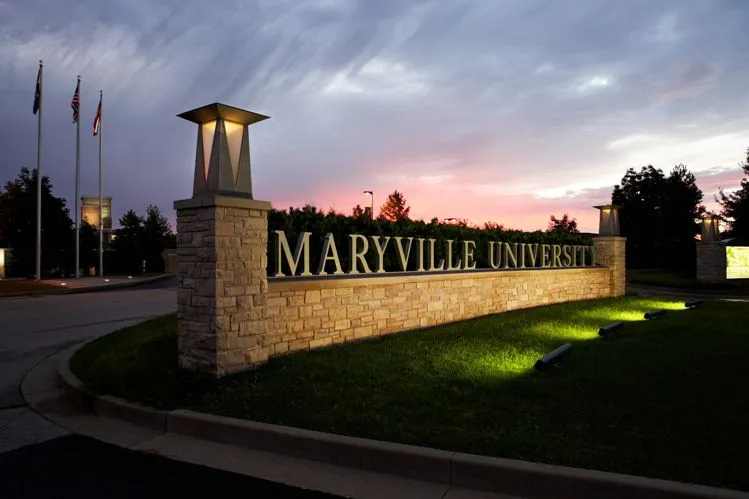 Photo: Maryville University, via www.thoughtco.com
This is real infrastructure. Real money. And it is actively looking for real players.
The Scholarship Math That Nobody Is Doing
Here's where it gets genuinely interesting for families running college cost calculations. Esports scholarships at NACE member institutions range from partial tuition assistance all the way up to full-ride packages covering tuition, room, board, and fees. The average esports scholarship hovers somewhere between $4,000 and $8,000 per year at most programs, but top-tier recruits at competitive programs can land packages worth $20,000 to $60,000 annually.
For context: the average annual cost of attending a four-year private university in the United States currently sits north of $55,000. A full esports scholarship at a private institution is not a novelty. It is a life-changing financial instrument.
And yet, according to multiple college counselors who work with high school students across the country, the awareness gap is staggering. Traditional athletic scholarships — football, basketball, soccer — are aggressively marketed to high school athletes through camps, showcases, and recruiting services that have existed for decades. The esports equivalent infrastructure is still being built, which means the students who find it first have a significant competitive advantage.
What Scouts Are Actually Looking For
If you're thinking the bar is "be really good at a video game," you're partially right and mostly wrong.
College esports coaches — and yes, these are actual full-time coaching positions with benefits and performance reviews — are recruiting for a combination of mechanical skill, mental composure, and what multiple coaches have described as "coachability." Being the best player in your regional ranked ladder is a starting point, not a finish line.
Communication skills matter enormously. Team-based titles like Valorant, Rocket League, and League of Legends require constant in-game communication, and coaches want players who can process feedback without melting down. Academic eligibility requirements mirror traditional athletics at most programs — you need to maintain a minimum GPA and stay enrolled full-time.
The recruiting pipeline is also increasingly formalized. High school esports associations at the state level have exploded in participation over the last three years. Organizations like the High School Esports League (HSEL) and PlayVS have created competitive frameworks that college scouts actively monitor. If a high school student is playing competitive varsity esports through one of these organized platforms, they are already visible to recruiters in a way that solo-queue ranked grinding simply isn't.
The Schools Dominating Right Now
Beyond the programs already mentioned, a few names keep appearing at the top of national collegiate esports standings. The University of Texas at Dallas has become a consistent powerhouse across multiple titles. Boise State University in Idaho runs one of the more respected programs in the Mountain West. On the East Coast, Drexel University in Philadelphia has invested heavily in both facilities and recruiting.
 Photo: University of Texas at Dallas, via ik.imagekit.io
Community colleges are also entering the space in meaningful numbers. Schools like Irvine Valley College in California offer esports programs with scholarship opportunities that serve as legitimate transfer pipelines to four-year institutions — making this an accessible path for students who might not be ready for a direct university application.
The Conversation Parents Need to Have Yesterday
Here's the uncomfortable truth for any parent who has spent the last four years telling their kid to put down the controller: those hours may have been building something bankable.
The same conversation families have about identifying athletic talent early and building a recruitment strategy around it needs to happen in households where competitive gaming is the primary extracurricular activity. That means documenting competitive achievements, identifying which titles have the strongest collegiate presence, building a highlight reel, and reaching out to program coaches directly — exactly the way a baseball player would send film to a college coach.
The esports scholarship market is still young enough that a student who approaches it with genuine preparation and strategy has an outsized advantage over peers who stumble into it accidentally. The window where this is an undiscovered opportunity is closing. The programs are growing, the money is real, and the seats are limited.
Somewhere, a scholarship with a gaming chair attached to it is waiting for the kid who figured this out first. Make sure it's yours.