Red Bull and Regret: Inside America's Obsession with Watching Gamers Slowly Lose Their Minds
The 3 AM Truth Bomb
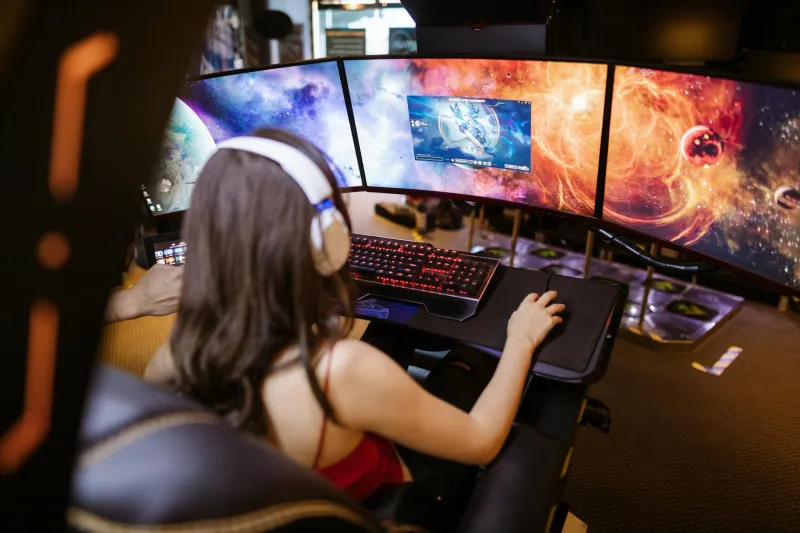
It's 3:17 AM on a Tuesday, and somehow 40,000 people are watching a guy named "SpeedyMcGee87" attempt his 847th run of Super Mario 64 while surviving on nothing but energy drinks and pure spite. His eyes are bloodshot, his commentary has devolved into incomprehensible mumbling, and he just walked Mario straight off a cliff for the third time in five minutes.
And we're absolutely here for it.
Welcome to the bizarre, beautiful, and slightly concerning world of marathon gaming streams — where sleep is optional, caffeine is currency, and millions of Americans have collectively decided that watching someone slowly descend into gaming-induced madness is peak entertainment.
When Insomnia Became Content Gold
Marathon gaming streams have exploded from niche curiosity to mainstream phenomenon faster than you can say "another Monster Energy, please." Events like Games Done Quick routinely pull in millions of viewers and raise obscene amounts of money for charity, while individual streamers regularly hit six-figure viewer counts during their epic gaming binges.
But here's the thing that nobody wants to admit: we're not just watching for the gaming. We're watching for the slow-motion trainwreck of human endurance meeting digital obsession.
"There's something deeply American about watching someone push themselves to the absolute limit for no reason other than they said they would," explains Dr. Sarah Chen, a media psychologist who's studied streaming culture. "It's like a digital version of those old flagpole sitting contests, except now it's 'can this person beat Dark Souls without sleeping for 30 hours?'"
The Anatomy of Beautiful Disaster
The formula is deceptively simple: take one determined gamer, add an impossible challenge, remove sleep and proper nutrition, then broadcast the resulting chaos to the world. What emerges is part athletic endurance test, part psychological experiment, and part accidental comedy goldmine.
These streams follow a predictable arc that's become as familiar as any Netflix series. Hour 1-6: confident banter and solid gameplay. Hour 7-12: the first cracks appear, usually involving increasingly creative profanity. Hour 13-18: delirium sets in, accompanied by philosophical rants about life and gaming. Hour 19+: pure, unfiltered chaos where anything can happen.
"The beauty is in the breakdown," admits longtime marathon stream viewer Jake Morrison from Phoenix. "You tune in at hour 2 when they're cocky, then you check back at hour 20 when they're having a full conversation with their houseplant about speedrun strategies."
America's New Gladiator Arena
What's fascinating is how these streams have tapped into something uniquely American: our love affair with extreme endurance challenges wrapped in a bow of digital entertainment. We're the country that invented competitive eating contests and made reality TV about surviving on an island — of course we'd turn gaming into an endurance sport.
The charity angle adds another layer of cultural resonance. Games Done Quick has raised over $40 million for various charities, turning sleep-deprived gaming into genuine social good. It's the perfect American redemption story: turn your potentially unhealthy obsession into a force for positive change.
"These events have figured out how to weaponize American guilt," jokes longtime GDQ attendee Maria Rodriguez from Austin. "You feel bad about watching someone slowly lose their mind for 30 hours, so you donate money to make it socially acceptable."
The Dark Side of Digital Gladiators
But let's be real about what we're actually watching. These marathon streams are essentially endurance challenges that would make Navy SEALs wince. Sleep deprivation, poor nutrition, repetitive stress injuries, and the psychological pressure of performing for thousands of viewers — it's not exactly a recipe for long-term health.
Some streamers have started incorporating "health breaks" and setting limits on their marathon attempts after high-profile incidents of streamers collapsing on camera or requiring medical attention. The community has begun grappling with the uncomfortable question: when does entertainment cross the line into exploitation?
"There's definitely a voyeuristic element," admits Dr. Chen. "We're watching people push themselves to unhealthy extremes for our entertainment. It's gladiatorial, just with controllers instead of swords."
The Addiction Economy
The economics driving this phenomenon are as twisted as the sleep schedules. Marathon streams generate massive viewer engagement, which translates to donations, subscriptions, and sponsorship deals. For many streamers, a successful 24-hour stream can generate months of income in a single weekend.
This creates a perverse incentive structure where the more exhausted and unhinged a streamer becomes, the more entertaining (and profitable) their content gets. It's like an arms race of self-destruction, where the winner is whoever can stay awake the longest while maintaining some semblance of entertainment value.
Why We Can't Look Away
So why are millions of Americans choosing to spend their free time watching other people slowly lose their grip on reality through gaming? The answer says as much about us as viewers as it does about the streamers.
There's something deeply satisfying about watching someone else push through the exact kind of challenges we face in our own lives — exhaustion, frustration, the temptation to quit when things get hard. Except they're doing it in a controlled environment where the stakes are simultaneously meaningless (it's just a game) and profound (their reputation, income, and sanity are on the line).
"It's like watching a mirror of modern American life," observes cultural critic David Park. "Someone staying up all night, fueled by caffeine and determination, trying to achieve something that might be completely pointless but feels incredibly important in the moment. That's basically every American's work experience."
The Verdict: Beautiful, Terrible, and Totally American
Marathon gaming streams represent something uniquely American: the ability to turn any human activity into both entertainment and a test of character. We've managed to create a form of digital entertainment that's simultaneously inspiring and concerning, charitable and exploitative, skillful and completely unhinged.
As this phenomenon continues to grow, we'll need to grapple with some uncomfortable questions about what we're actually consuming and whether the entertainment value justifies the human cost. But until then, we'll keep tuning in at 3 AM to watch someone attempt to beat Elden Ring with a dance pad while running on 30 minutes of sleep and pure Mountain Dew.
Because honestly? In a world full of scripted content and manufactured drama, there's something refreshingly authentic about watching someone slowly lose their mind in real-time over a video game. It's the most human thing we've got left.