America's Gaming Apartheid: How Your ZIP Code Determines Your Kill/Death Ratio
Tyler Williams can build a PC that would make a Silicon Valley engineer weep with envy. He can optimize graphics settings that squeeze every frame out of aging hardware. He knows the meta for six different competitive games and has the reflexes to prove it. But Tyler Williams, who lives in rural Montana, can't play any of them online.
Not because he lacks skill. Not because he can't afford the games. Because his internet connection is so bad that by the time his character loads into a match, half the lobby has already been eliminated.
"I'll queue up for a ranked match in Valorant, and by the time I actually connect, my team is down 0-8," Williams explains via a phone call that cuts out twice during our 20-minute conversation. "Then I get kicked for high ping, lose rank points, and get a temporary ban for 'leaving early.' The system thinks I'm rage-quitting when really I'm just living in the wrong ZIP code."
Welcome to America's gaming apartheid, where your internet speed determines not just your entertainment options, but your access to an entire economic and cultural ecosystem that urban America takes for granted.
The Great Digital Divide Gets Worse Every Year
While gamers in major metropolitan areas debate whether 1-gigabit fiber is fast enough for 4K streaming and simultaneous downloads, roughly 30 million Americans are stuck with internet connections that struggle to handle a single online match. According to the FCC's latest broadband availability data, 14% of rural Americans lack access to broadband internet, compared to less than 1% in urban areas.
But those numbers don't tell the real story. The FCC defines "broadband" as 25 Mbps download and 3 Mbps upload—speeds that were adequate in 2015 but are laughably insufficient for modern gaming. Today's games routinely require 50-100 GB downloads, real-time multiplayer connections, and constant cloud synchronization.
"The infrastructure gap isn't just growing—it's becoming a chasm," says Dr. Amanda Rodriguez, a telecommunications policy researcher at the University of Texas. "Gaming has evolved faster than rural internet infrastructure, and the gap is now so wide that we're essentially creating two different Americas: one that can fully participate in digital culture, and one that can't."
 Photo: University of Texas, via wallpapers.com
More Than Just Lag: The Real Cost of Connectivity
The gaming divide isn't just about entertainment—it's about economic opportunity. Esports scholarships are becoming a legitimate path to college funding, but they require consistent high-speed internet for practice and competition. Streaming and content creation represent billion-dollar industries, but they're geographically locked to areas with robust upload speeds.
Jessica Chen, a high school senior in rural Oregon, had to give up her dream of competing in collegiate League of Legends after receiving a partial scholarship to a state university. "The recruiter told me I needed to maintain a certain rank to keep the scholarship," she explains. "But I couldn't practice consistently because our internet would cut out during crucial matches. I was competing against kids with fiber connections while I was playing on what was basically dial-up."
Chen's story is repeated thousands of times across rural America: talented players whose potential is capped not by skill or dedication, but by infrastructure.
Cloud Gaming's Empty Promise
Tech companies love to tout cloud gaming as the great equalizer—just stream games from powerful servers, no expensive hardware required! But cloud gaming requires the most robust internet connections of all, making it effectively unavailable to the communities that would benefit most from not needing expensive local hardware.
Google Stadia failed partly because it promised to democratize gaming but required internet speeds that excluded huge portions of the country. Microsoft's Xbox Cloud Gaming and Nvidia's GeForce Now face the same fundamental problem: they're solutions for people who already have excellent internet, not for those who need alternative access to gaming.
"Cloud gaming is like offering flying cars to people who don't have roads," observes tech analyst Mark Stevens. "The technology is impressive, but it's solving the wrong problem for the wrong people."
The Industry's Selective Blindness
Major gaming companies have been remarkably quiet about the connectivity divide, and for good reason: rural gamers represent a small percentage of their revenue. Why invest in solutions for Montana when California generates ten times the profit?
But this market-driven approach creates a vicious cycle. Rural areas get worse service, so fewer rural residents become engaged gamers, so companies invest even less in rural-friendly solutions. Meanwhile, urban gaming culture advances at breakneck speed, leaving entire regions behind.
"The industry talks a lot about accessibility and inclusion, but they mean visual impairments and motor disabilities," notes Williams, the Montana gamer. "They don't mean geographic accessibility. If you live in the wrong place, you're just screwed, and no one wants to talk about it."
The Generational Catastrophe
Perhaps most concerning is how the connectivity divide affects young gamers. While urban kids grow up with seamless access to online communities, competitive gaming, and digital literacy skills, rural kids are increasingly isolated from youth culture that's predominantly online.
"My son knows he's missing out," says Karen Thompson, whose family lives outside Rapid City, South Dakota. "He hears his friends talk about games he can't play, streamers he can't watch consistently, and online communities he can't join. It's not just about entertainment—it's about social connection."
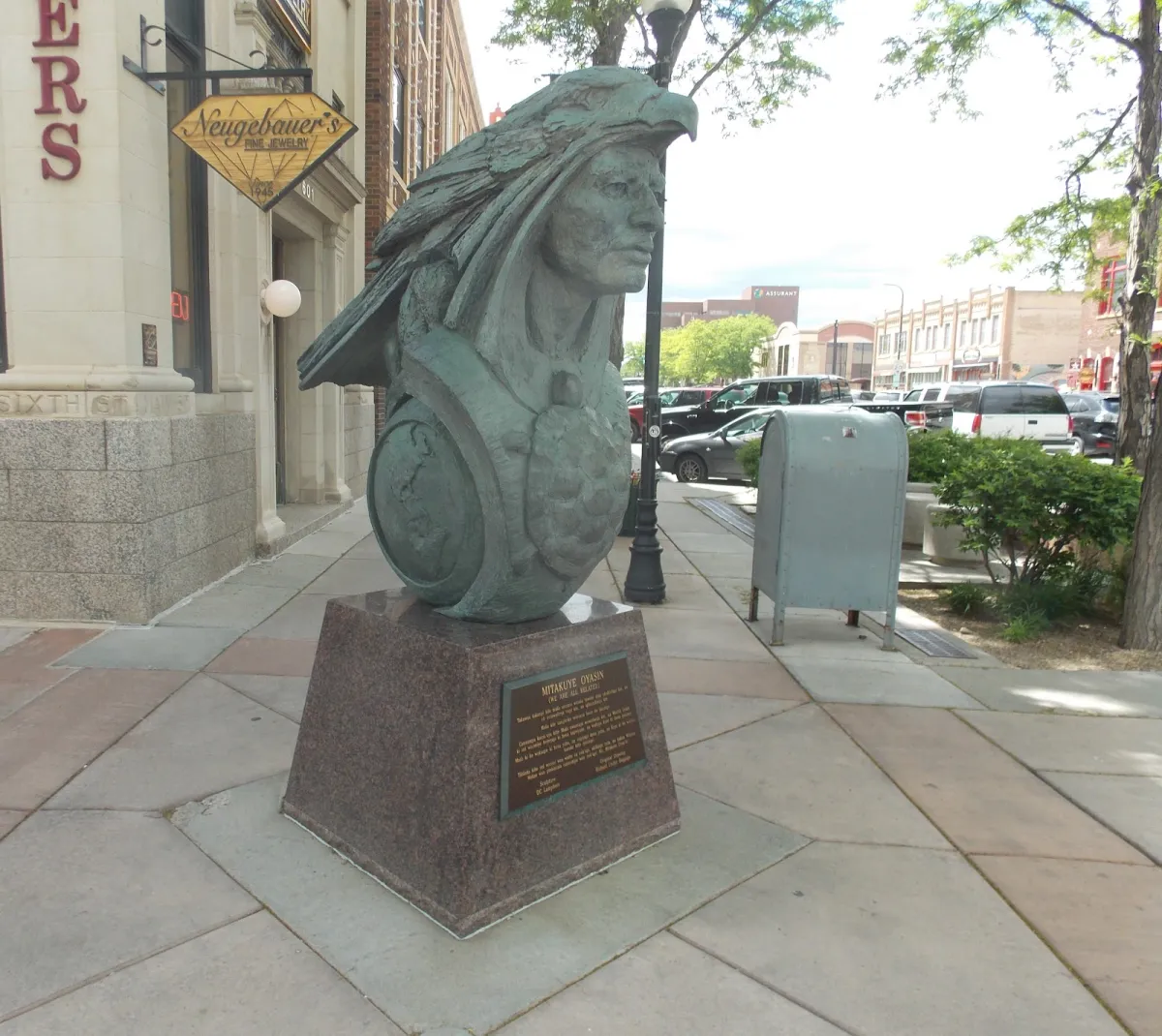 Photo: Rapid City, South Dakota, via 4.bp.blogspot.com
This isolation has long-term consequences. Gaming literacy is becoming as important as traditional digital literacy, but rural students are graduating with gaps in both technical skills and cultural knowledge that urban peers take for granted.
Solutions That Actually Matter
Fixing America's gaming apartheid requires acknowledging that this is infrastructure policy, not just entertainment preference. Rural broadband expansion needs to prioritize real-world usage patterns, not FCC minimums from a decade ago.
Some gaming companies are beginning to address the divide. Valve's Steam Deck allows offline gaming with periodic sync, reducing dependence on constant connectivity. Some mobile games now include robust offline modes and efficient data usage.
But real solutions require policy intervention. Municipal broadband initiatives in places like Chattanooga, Tennessee, have shown that high-speed internet access can transform entire regional economies. Gaming could be the killer app that finally justifies massive rural infrastructure investment.
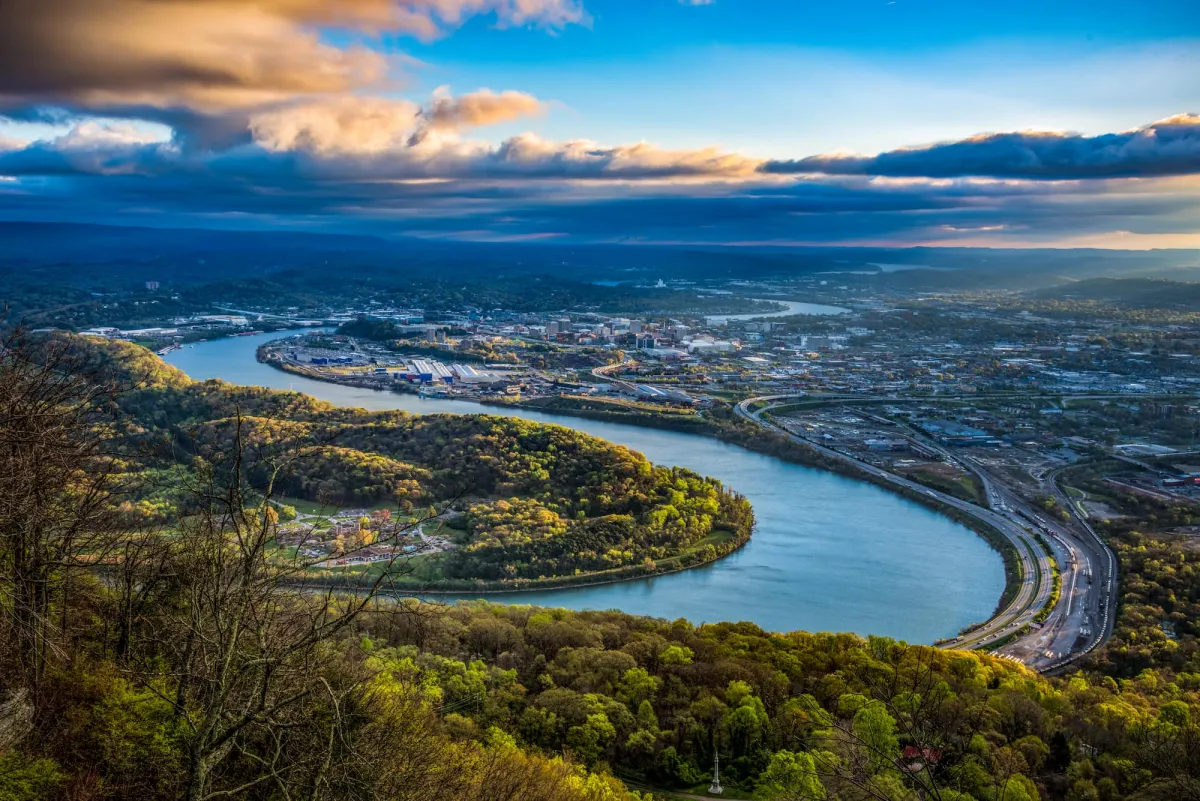 Photo: Chattanooga, Tennessee, via blog-assets.thedyrt.com
The Choice America Faces
We're rapidly approaching a point where digital participation isn't optional—it's essential for economic and cultural citizenship. Gaming represents one of the largest entertainment industries in the world, a growing source of educational and career opportunities, and an increasingly important space for social connection.
Americans in rural areas aren't asking for charity. They're asking for the same access to digital infrastructure that urban areas consider basic utility service. The question isn't whether we can afford to close the gaming divide—it's whether we can afford to let it keep growing.
Because ultimately, this isn't about games. It's about whether we're building one America or two, and whether your ZIP code should determine your access to the digital economy.
Tyler Williams is still building PCs and optimizing settings, hoping that someday he'll have internet fast enough to use them. In 2025, in the wealthiest country in the world, that hope shouldn't be necessary.