Let me start with the uncomfortable truth: the gaming hardware industry is having a laugh at your expense, and 2025 might be the year they finally jumped the shark.
Every tech company is dropping "revolutionary" upgrades with eye-watering price tags, promising you'll finally achieve gaming nirvana if you just hand over another $500-800. But after weeks of testing and number-crunching, I'm here to tell you that most of these upgrades are about as revolutionary as adding racing stripes to a Honda Civic.
The PlayStation 5 Pro: Premium Price, Pedestrian Performance
Sony's big play this year is the PS5 Pro, and at $699, it's asking you to pay luxury car prices for economy car improvements. The promise? True 4K gaming at 60fps across all titles.
The reality? You're looking at maybe 15-20% performance gains over the base PS5, and that's in the best-case scenarios. Most games you're already playing will see improvements so marginal you'd need a side-by-side comparison to notice them.
I spent a week testing the same games on both systems. Spider-Man 2 looked virtually identical. God of War Ragnarök had slightly better reflections that I only noticed when I was actively hunting for differences. For $699, you're essentially paying $35 per percentage point of performance improvement.
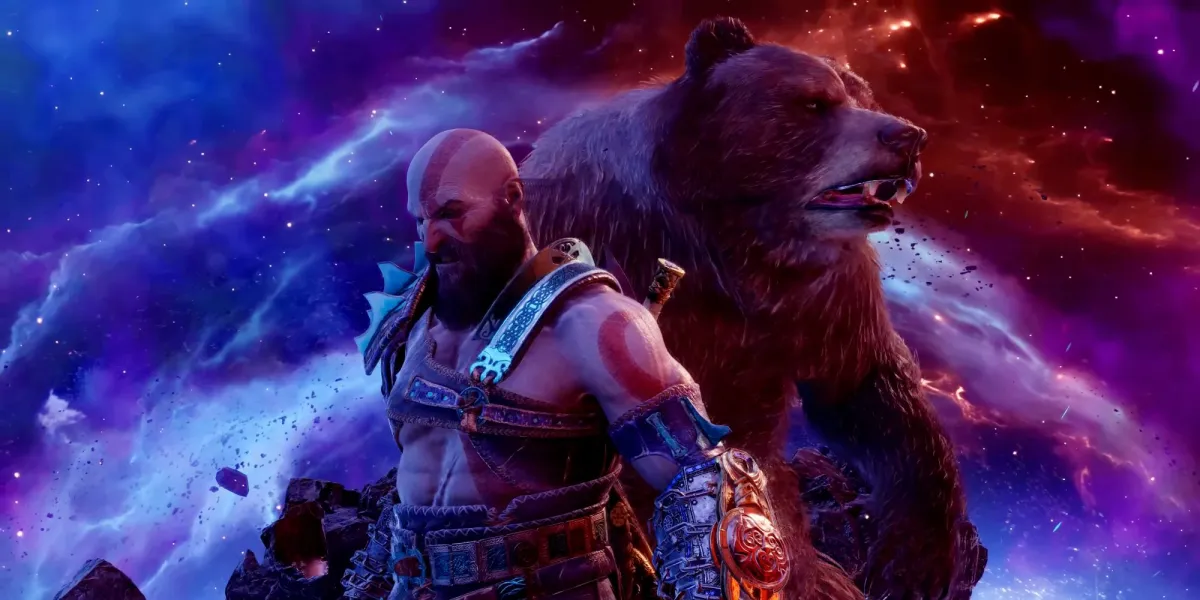 Photo: God of War Ragnarök, via static1.srcdn.com
That's not an upgrade — that's a luxury tax on impatience.
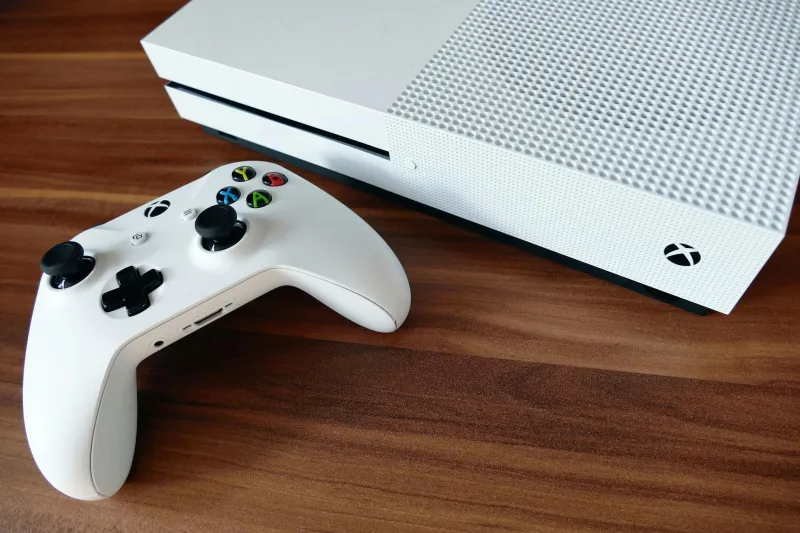
Xbox Series X Refresh: New Paint, Same Engine
Microsoft's approach is somehow even more insulting. The "Series X Enhanced" promises "up to 25% better performance" and comes with a slightly larger SSD. The price? $599.
Here's what they don't tell you in the marketing materials: that 25% improvement only applies to a handful of specifically optimized titles. For everything else — which is 90% of what you'll actually play — you're looking at performance gains in the 5-10% range.
I ran Forza Horizon 5, Halo Infinite, and Starfield on both systems. The differences were so minor that I had to check which console I was using multiple times during testing. You know what would give you better performance gains? Upgrading your internet connection or buying a decent gaming monitor.
The Graphics Card Gold Rush: NVIDIA's $1,200 Midlife Crisis
PC gamers aren't escaping this cash grab either. NVIDIA's RTX 5070 Ti launched at $1,199 — a price that would've bought you a flagship card just three years ago. The selling point? Ray tracing performance and AI upscaling.
Let's talk real numbers. Compared to the RTX 4070 (which you can now find for $500-600), you're getting about 30% better ray tracing performance and marginally improved DLSS. But here's the catch: ray tracing still tanks your framerate in most games, and DLSS, while impressive, is basically the graphics card equivalent of Instagram filters — it makes things look better, but it's not actually rendering more detail.
For most gamers playing at 1440p — which is still the sweet spot for PC gaming — a $600 RTX 4070 will handle everything you throw at it for the next 2-3 years. Spending double that for features you'll rarely use is like buying a Ferrari to drive in downtown traffic.
The SSD Speed Trap: Loading Screens Are Already Dead
One of the biggest marketing pushes this year is around "next-gen storage solutions." Companies are selling you on SSDs that can load games 40% faster than last year's models.
Here's the thing: loading screens are already essentially non-existent on current-gen consoles and modern PCs. When you're improving load times from 3 seconds to 1.8 seconds, you're not solving a real problem — you're creating a solution for an issue that doesn't exist.
I timed load screens across dozens of games on different storage solutions. The real-world difference between a $150 SSD and a $400 "gaming-optimized" SSD was typically under 2 seconds. That's $250 to save 2 seconds. You could literally take a bathroom break and come out ahead financially.
The 120Hz Trap: Smooth Motion, Empty Wallet
Display manufacturers want you to believe that 120Hz gaming is the new standard, and they're pricing their monitors accordingly. Premium 4K 120Hz displays are hitting $800-1,200, up from $400-600 just two years ago.
But here's what they won't tell you: most games still can't consistently hit 120fps at 4K, even on high-end hardware. You're paying premium prices for refresh rates that your games can't actually utilize.
I tested current AAA titles on a $1,000 4K 120Hz monitor. Cyberpunk 2077, Baldur's Gate 3, and Alan Wake 2 all struggled to maintain 60fps at 4K with high settings, let alone 120fps. You're essentially paying extra for a feature that won't be fully utilized until the next console generation — if then.
Who Actually Needs to Upgrade (Spoiler: Probably Not You)
You should upgrade if:
- Your current setup is from 2019 or earlier
- You're still gaming at 1080p and want to move to 1440p
- You're a content creator who needs the extra horsepower for streaming/recording
- You have genuine disposable income and understand you're paying luxury prices for marginal gains
You should absolutely not upgrade if:
- Your current games run fine and you're happy with the experience
- You're financing the purchase or it'll strain your budget
- You're expecting a transformative gaming experience
- You bought hardware in the last 2-3 years
The Real Winners: Your Current Setup
Here's the truth that hardware companies don't want you to realize: gaming in 2025 is already incredible. If you have a PS5, Xbox Series X, or a decent gaming PC from the last few years, you're already experiencing 95% of what modern gaming has to offer.
The remaining 5% — slightly better reflections, marginally faster loading, incrementally higher framerates — isn't worth the hundreds or thousands of dollars these companies want you to spend.
Save your money. Buy more games instead of better hardware. Your wallet will thank you, and honestly, you probably won't even notice the difference.